Why Air New Zealand Is Still One of the World’s Most Innovative Airlines
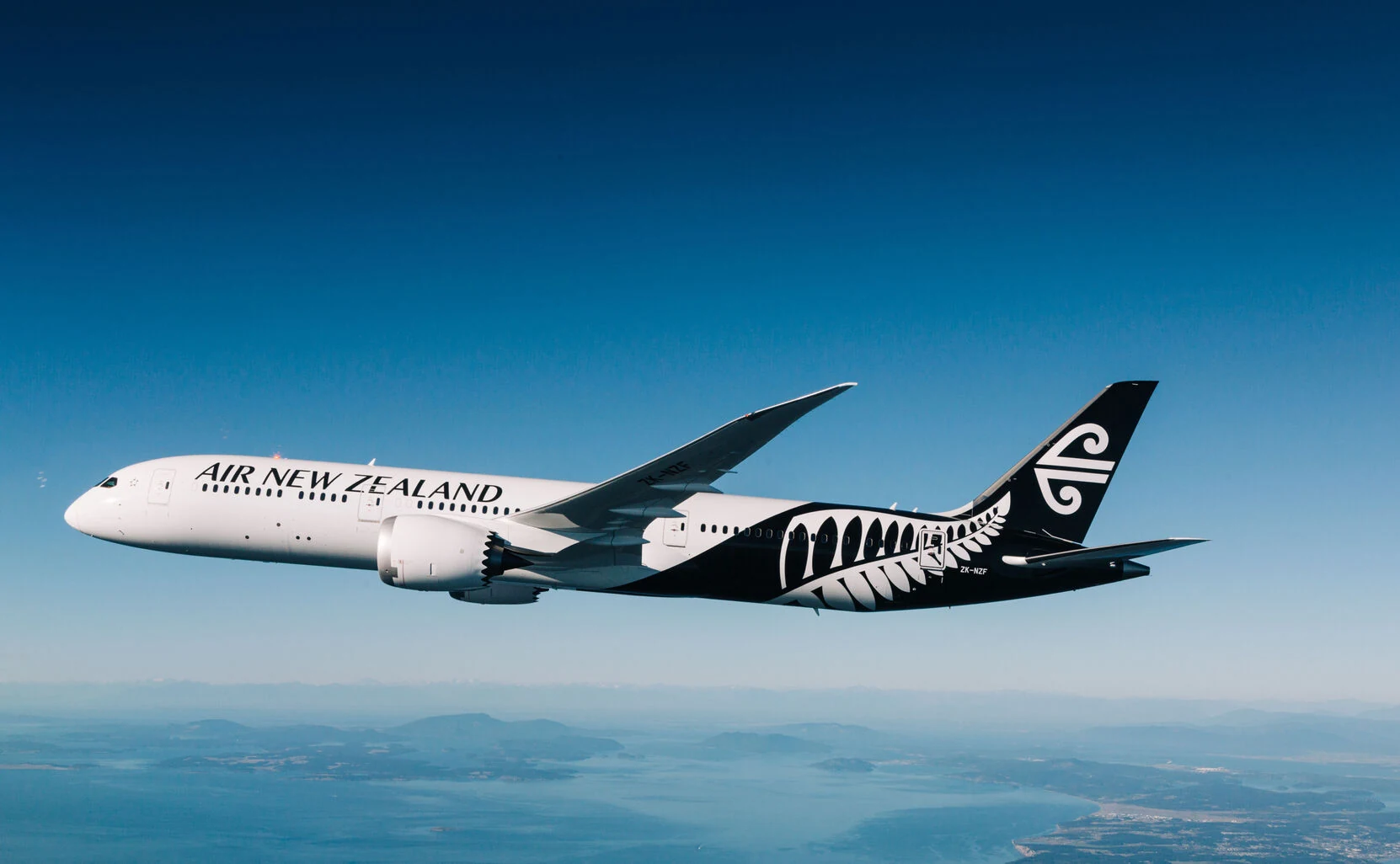
New chef-designed menus and the world’s first economy sleep pods showcase how the national carrier is redefining the journey to Aotearoa New Zealand.
Spend nearly 18 hours on an airplane and your priorities change. A little more privacy. A better meal. Somewhere comfortable enough to get a few hours of uninterrupted sleep. Those are the problems Air New Zealand has spent years trying to solve. Along the way, the country’s flagship carrier has earned a reputation for introducing ideas that larger airlines often wouldn’t risk.
First came the Skycouch, a simple yet surprisingly effective way to turn a row of economy seats into a couch-like space for stretching out. Most recently, the airline just introduced something even more ambitious: Skynest, the world’s first sleep pods for economy passengers. It’s part of a broader refresh of Air New Zealand’s Dreamliner fleet, one that touches everything from cabins to dining while reinforcing a distinctly Kiwi approach to hospitality.
A New Take on Business Class
The most visible change isBusiness Premier Luxe, a new premium product available on select retrofitted Dreamliners. Airline executives love to talk about “elevated experiences,” but Luxe is refreshingly straightforward. Passengers get a fully enclosed suite with a closing door, a larger lie-flat bed, and enough space for a companion to join them for a meal.
The result is more private than the airline’s existingBusiness Premiercabin, but doesn’t replace it. Instead, it gives travelers another option on flights where spending upwards of 13 hours in the air can make additional privacy feel less like luxury and more like a necessity. The redesign draws on feedback from thousands of customers,prioritizing what matters most onultra-long-haul flights: better sleep, more personal space, and greater flexibility during the journey.
Rethinking Economy Travel
For all the headlines surrounding Business Premier Luxe, Air New Zealand’s most interesting ideas arguably remain in the back of the aircraft. The airline introducedSkycouchmore than a decade ago, and it remains one of the smartest solutions in commercial aviation. By extending the leg rests of an economy row, the seats create a flat surface large enough for couples, solo travelers, or families with young children to stretch out across.
Skynesttakes the concept further. Available to Economy andPremium Economypassengers on select Boeing 787-9 V5 aircraft, the world’s first economy sleep pods allow travelers to leave their seat and retreat to a dedicated bunk-style bed for part of the journey. On routes such as New York-Auckland—among the longest nonstop flights in the world—that opportunity to stretch out fully horizontal will no doubt be a genuine game changer.
Creating better rest options for economy passengers is an idea surprisingly few airlines have seriously explored. Elsewhere on the retrofitted Dreamliners, a self-service Sky Pantry stocked with snacks and drinks gives travelers another excuse to get up and move around during the flight—something every frequent flyer knows can make a long journey feel considerably shorter.
Bringing New Zealand to the Menu
Food has long been one of the ways airlines attempt to create a sense of place, and Air New Zealand is leaning further into that idea through a new partnership withchef Josh Emett. One of the country’s most accomplished chefs, Emett built his career working alongside Gordon Ramsay and remains the only New Zealand chef to earn Michelin stars at restaurants in London, New York, and Los Angeles. As the airline’s new Culinary Ambassador, Emett has developed premium-cabin dishes for long-haul flights departing Auckland and select services from North America.
But it’s not just a restaurant menu scaled for the sky. Flavor behaves differently at altitude, so his dishes lean into ingredients and combinations that can hold their own in the sky: Fiordland wild venison with golden kūmara chutney, and kawakawa-spiced beetroot, alpine salmon with chili creamed sweetcorn, and desserts built around kiwifruit and Anzac biscuit, the oat-and-coconut cookie beloved in New Zealand and Australia.
Thedrinks menutells a similar story. Wellington’s Parrotdog Brewery created Dash-hound, a New Zealand IPA brewed specifically for service at altitude, while the airline’s “Thirteen Forty Five” wine label—named after Air New Zealand’s inaugural Auckland-to-Sydney flight in 1940—is produced in partnership with Villa Maria. This emphasis on the identity and culture of Aotearoa New Zealand extends beyond the menu. Last year, the airline unveiled uniforms designed by New Zealand-bornEmilia Wicksteadin collaboration with Māori artistTe Rangitu Netana, whose bespoke tā moko-inspired prints bring another layer of storytelling to the onboard experience.
Conservation at 35,000 Feet
What separates Air New Zealand from many national carriers, however, is a connection to the country that extends beyond tourism. Since 2012, the airline has partnered with New Zealand’sDepartment of Conservation(DOC), helping transport endangered wildlife, conservation teams, and certified conservation dogs around the country.
The numbers are impressive: more than 4,500 wildlife passengers to date, including kiwi, takahē, pāteke, native reptiles, and hundreds ofconservation dogs. Thosedogsplay a critical role in New Zealand’s ongoing predator-control efforts, locating invasive species that threaten native wildlife and supporting recovery programs for some of the country’s rarest animals. It’s an unusually practical conservation partnership—less marketing campaign, more logistical support—and one that reflects how closely environmental protection is tied to New Zealand’s national identity.
Getting There
For North American travelers, Air New Zealand currently operates nonstop flights from Los Angeles, San Francisco, Houston, New York, and Honolulu, with onward connections available through Star Alliance partner United Airlines. Most visitors arrive inAuckland, the country’s largest city and primary aviation hub, whileWellingtoncombines a celebrated food scene with easy access to one of the country’s leading urban wildlife sanctuaries. Whenever you visit, the flight will likely be one of the longest you take all year. And by the time you step off the plane, you will already have had a first taste ofNew Zealand—through those distinctly “kiwi” touches woven throughout the journey.
All photos courtesy of Air New Zealand.